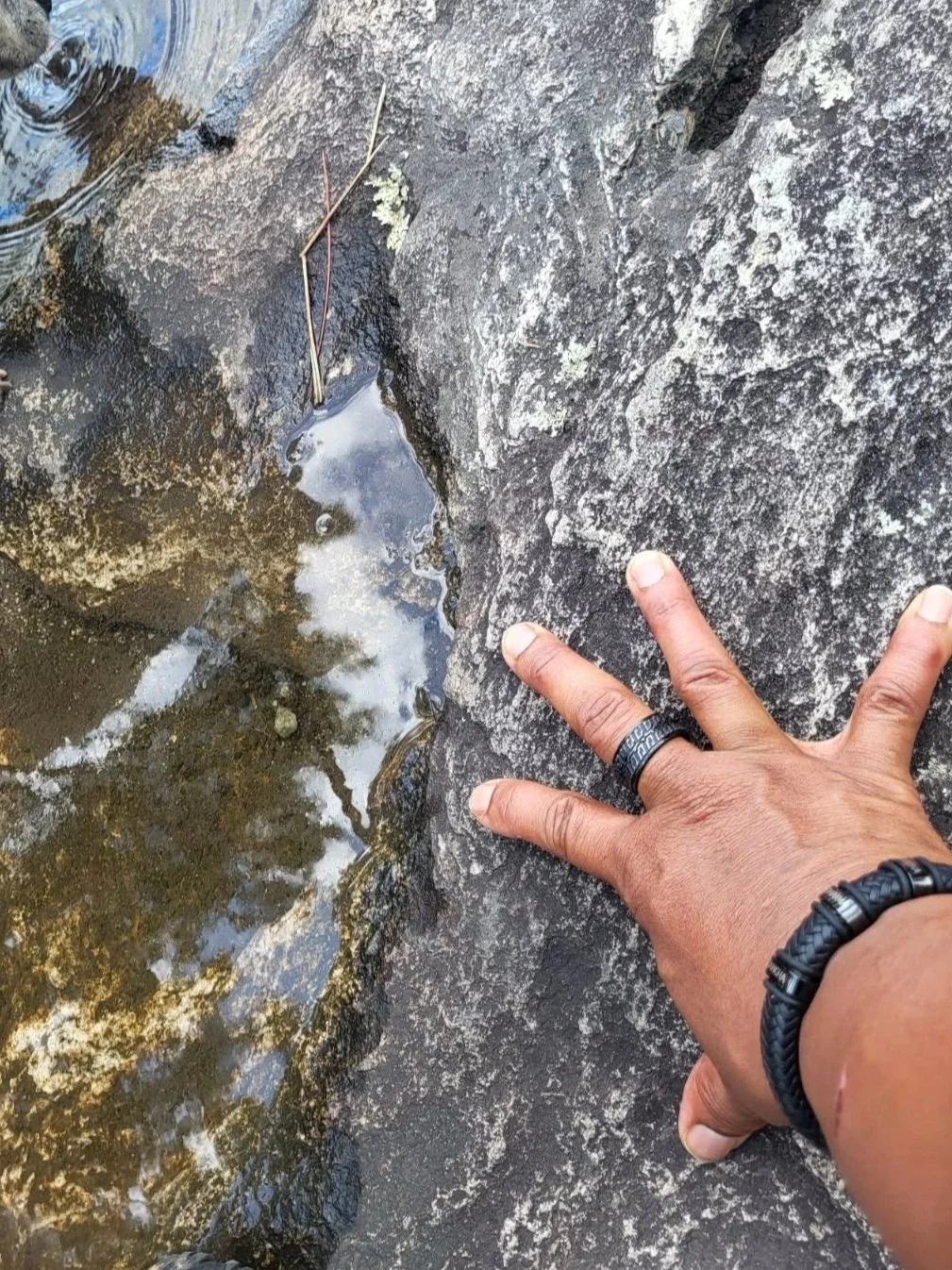
This week, Rev. John shared a photograph of his husband, Vance, and one of their beloved fur pups, Willow. It was a beautiful, ordinary moment. But what caught my attention wasn't simply what was happening in the foreground. It was what was being reflected in the background.
There, almost hidden within the larger picture, was another perspective. I could see John, the back of Vance, and Willow. The same moment, but viewed from another angle. A picture within a picture.
The other day, I was driving out of my neighborhood when I saw a black and white boxer dog on the street. As I passed by him, I could see he had a collar on. He looked at me as if he was checking to see if I was his person. He didn’t run from the car. He looked confused. Maybe he was not from my area.
The eye-to-eye look was unsettling for me. He was asking for help. I was in a hurry to go somewhere, so I thought to myself that he maybe he would be o.k. if I drove on.
There is always somewhere to go, something to experience, another event to attend, another goal to achieve, another post to read, another thing demanding our attention.
We call it FOMO—the fear of missing out.
But what if there is another way?
JOMO—the Joy of Missing Out.
JOMO is the realization that we do not have to participate in everything simply because we can.
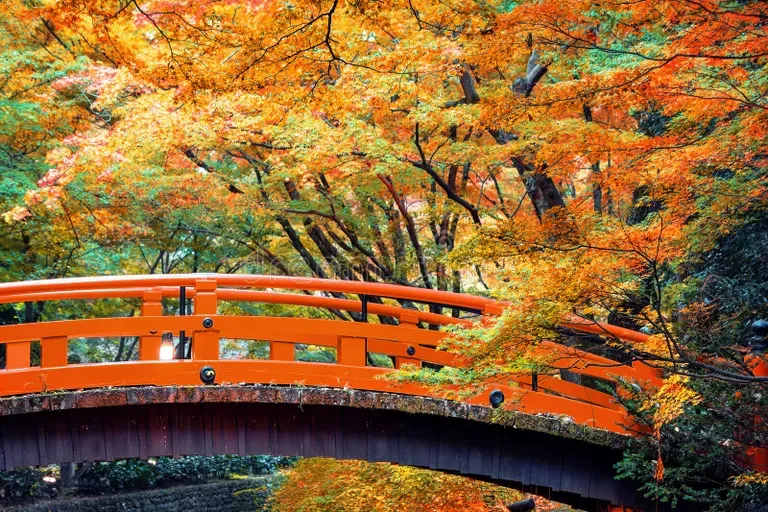
Autumn is my favorite season. We’re getting away from the heat of summer to cooler temperatures. Beautiful fall colors are beginning to paint the canvas of our daily lives. Chefs everywhere are thinking of ways to surprise us with pumpkin spice.
Fall did not wait for anyone’s approval to step out, and neither must we. Nature has all she needs to lead us on the journey of life. We need look no further.
From a Zen perspective, I believe that this has to do with impermanence being visible. The world changes right in front of us.
We remember a day that revealed the terrible capacity human beings have for destruction. We remember lives lost, families forever changed, and a wound that became part of our collective memory.
But that day—and the days that followed—revealed something else about us.
Our capacity to love.
In the midst of destruction, people ran toward one another.
Strangers helped strangers. People carried one another. Communities gathered. Hands reached through smoke, fear, grief, and uncertainty.
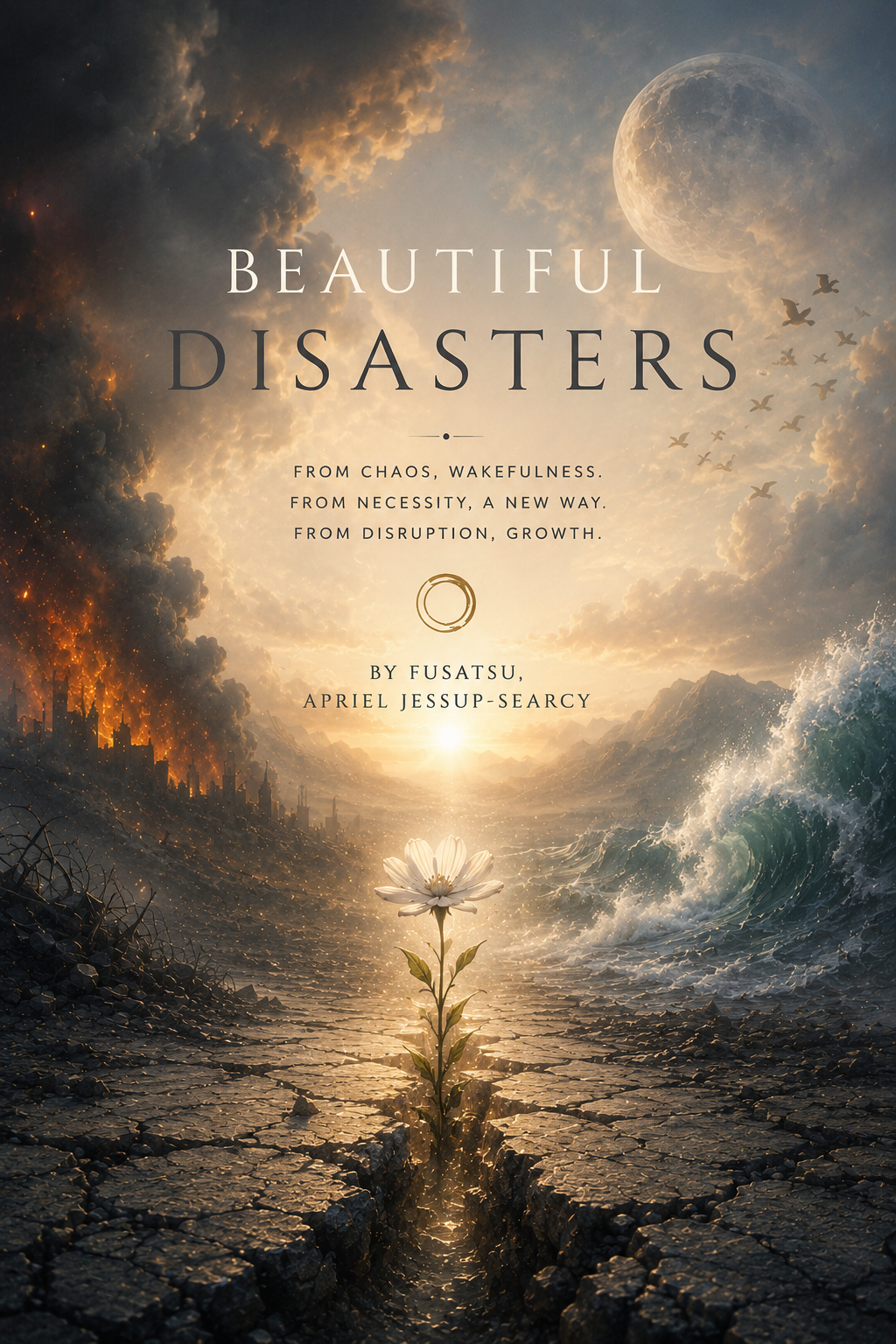
Yet some of the greatest changes in our lives rarely arrive neatly. They come through disruption, uncertainty, loss, illness, conflict, and circumstances we would never have chosen.
They arrive looking like disasters.
Illness can force us to reconsider how we care for our bodies and how we spend our time. Climate change challenges us to reconsider our relationship with the Earth. Humanitarian crises expose suffering that can no longer be ignored. Even the smaller disruptions of our personal lives—a relationship ending, losing a job, changing direction, or simply realizing that the life we have built no longer fits—can awaken us.
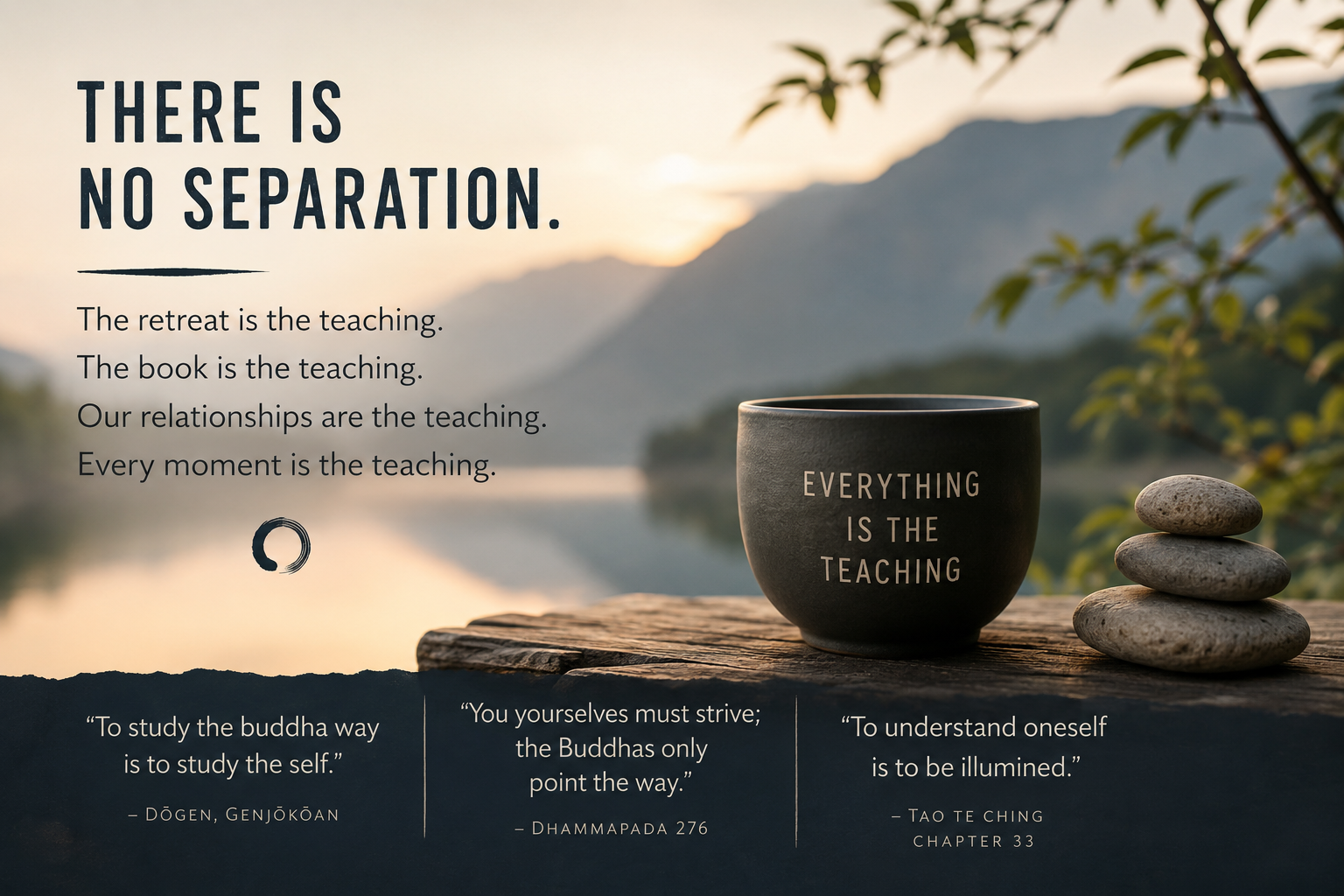
Chapter 33 of the Tao Te Ching turns our attention away from accumulating knowledge about the world and back toward knowing ourselves:
“To understand oneself is to be illumined.” — Tao Te Ching, Chapter 33, Arthur Waley translation Perhaps this is why the teachings become simpler with time. Eventually, the boundary between practice and life begins to disappear.
We've been told the American Dream is about having more.
A bigger house. A nicer car. More money. More success. More things.
Too often, it has become a life financed by debt and measured by possessions. We spend years working to pay for a lifestyle that leaves us with little time to enjoy the life we were trying to build.
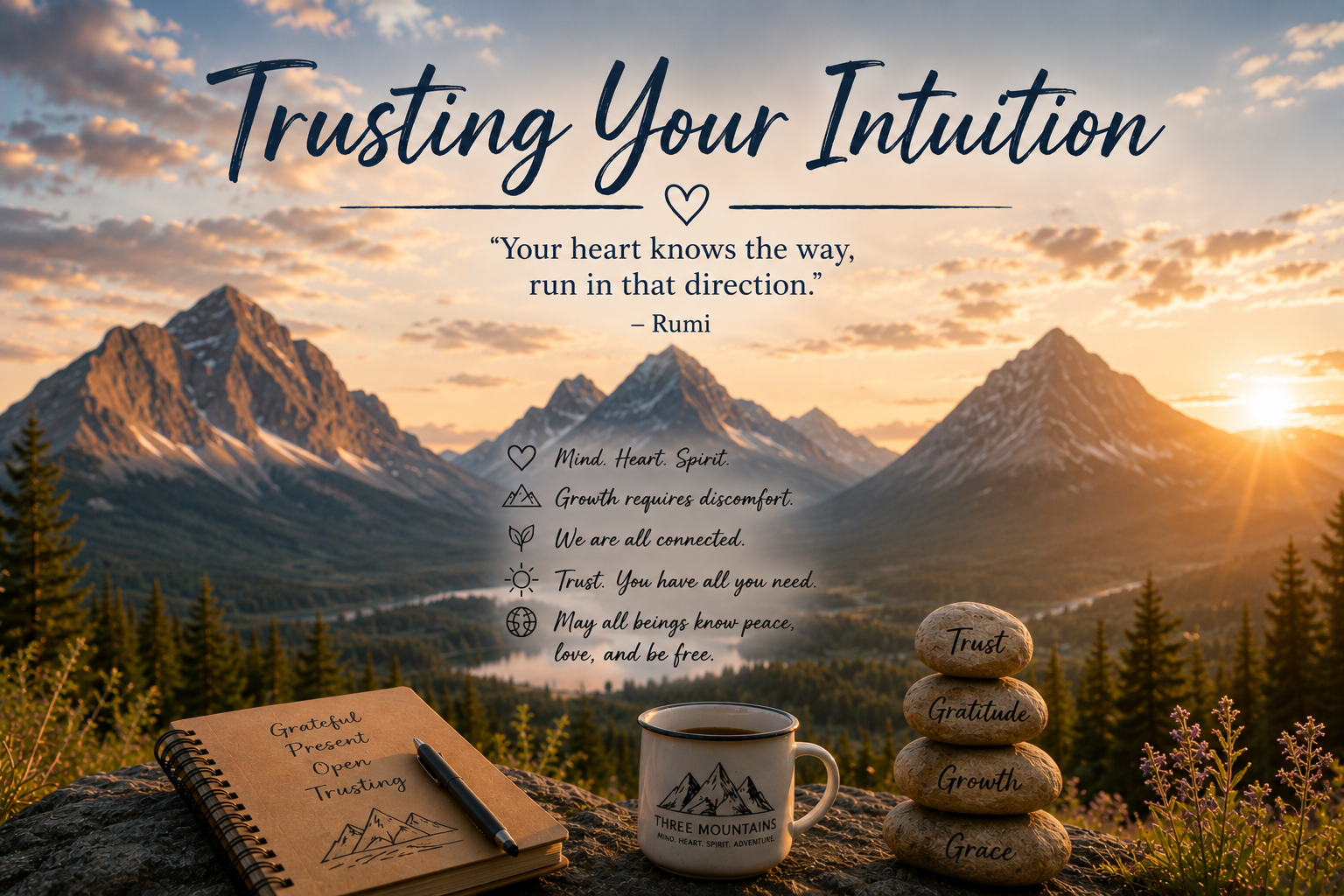
In her daily reader, “The Three Mountains Way,” author and Zen Buddhist Futsatu Apriel Jessup-Searcy offers us a mindful path for the week. We will start this one today (Sunday) August 16, 2024 and run through the end of the week. The bigger picture for this week is as follows:
· Ujamaa — Cooperative Economics: I circulate energy with care and balance.
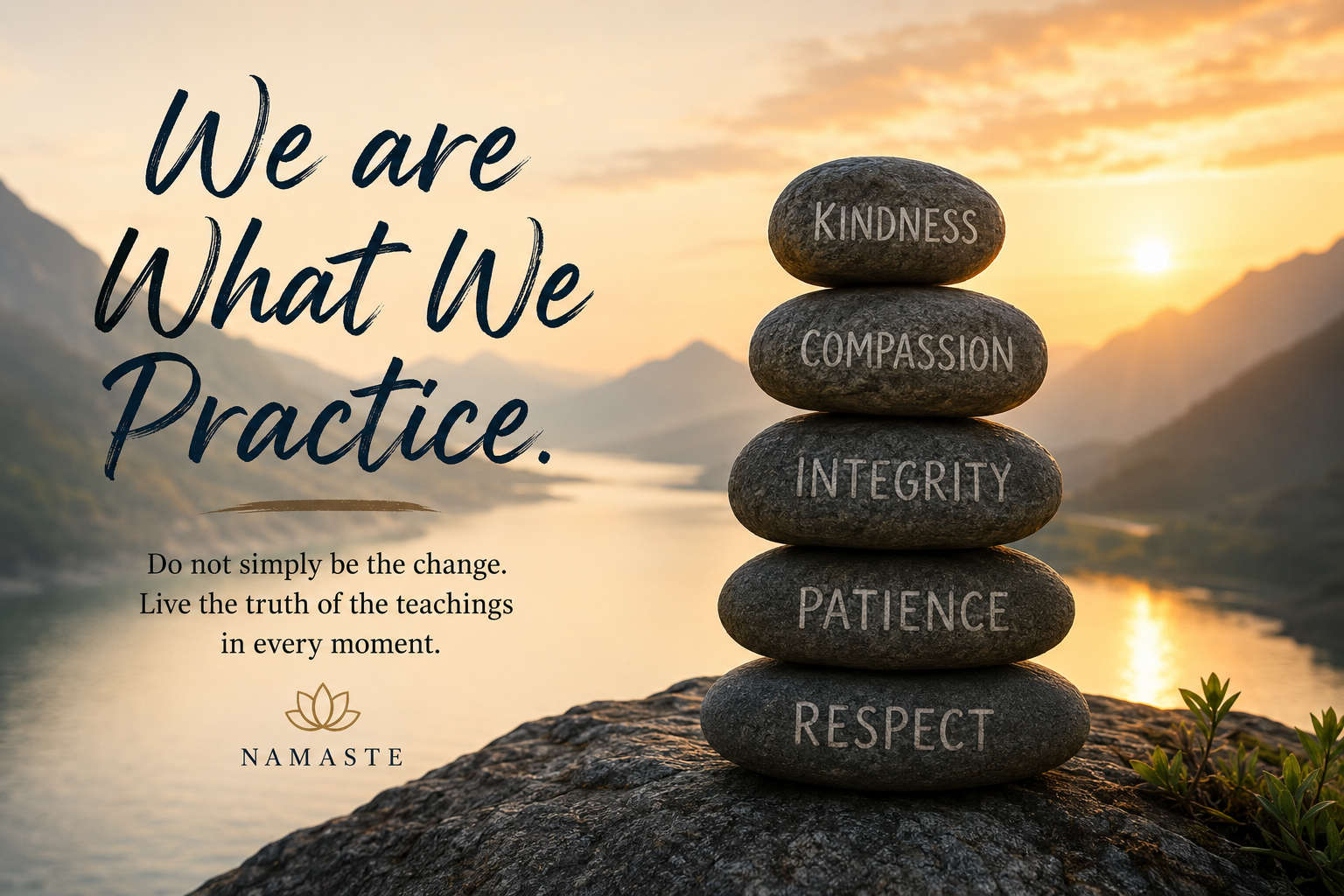
I have studied and practiced many teachings along this endless path. One truth has remained constant throughout my journey: at the foundation of every great spiritual and religious tradition lies an ethical way of living. Whether we call them the Ten Commandments, the Noble Eightfold Path, the Five Precepts, or simply the Golden Rule, they all point toward the same aspiration—to live in a way that reduces suffering and nurture compassion.
In a world filled with noise, distraction, and constant change, it’s easy to mistake spiritual learning for spiritual living. We read, we listen, we reflect—but the true test of any practice begins when life challenges us.
Spiritual teachings, no matter how profound, remain ideas until they are embodied.
I was challenged, by Zen Buddhist Practitioner Fusatsu, to study the Thirty-Seven Practices of Bodhisattvas. I’m a spirituality nerd so I was all in.
Generally speaking, I did one a day whereby I read it out loud in the morning, again in the evening and I thought about it in between. When I got to the fifth one, I had to stop. It was too important to not give it my complete attention.
At times the world seems so chaotic, as though everything is spinning beyond our control. These are the moments that invite us to settle more deeply into our practice and remember what truly brings stability.
It is not the things we spend so much of our lives accumulating. Not money. Not possessions. Not status. Not the endless hours devoted to work. These are all temporary, and when we cling to them, they become sources of attachment and suffering.
Summer arrives without argument. It does not announce itself with doctrine, but with cicadas in the trees, birds proudly singing their songs, grass rising after rain, the sunlight and humidity resting on us as if it has nowhere else to be.
In this season, once again, nature is our quiet teacher. So many of us are grasping for spiritual lessons hungrily, when our teacher has been here all along. I call her Mother Earth, or Gaia. She has all the intelligence we need, as her offering to us.
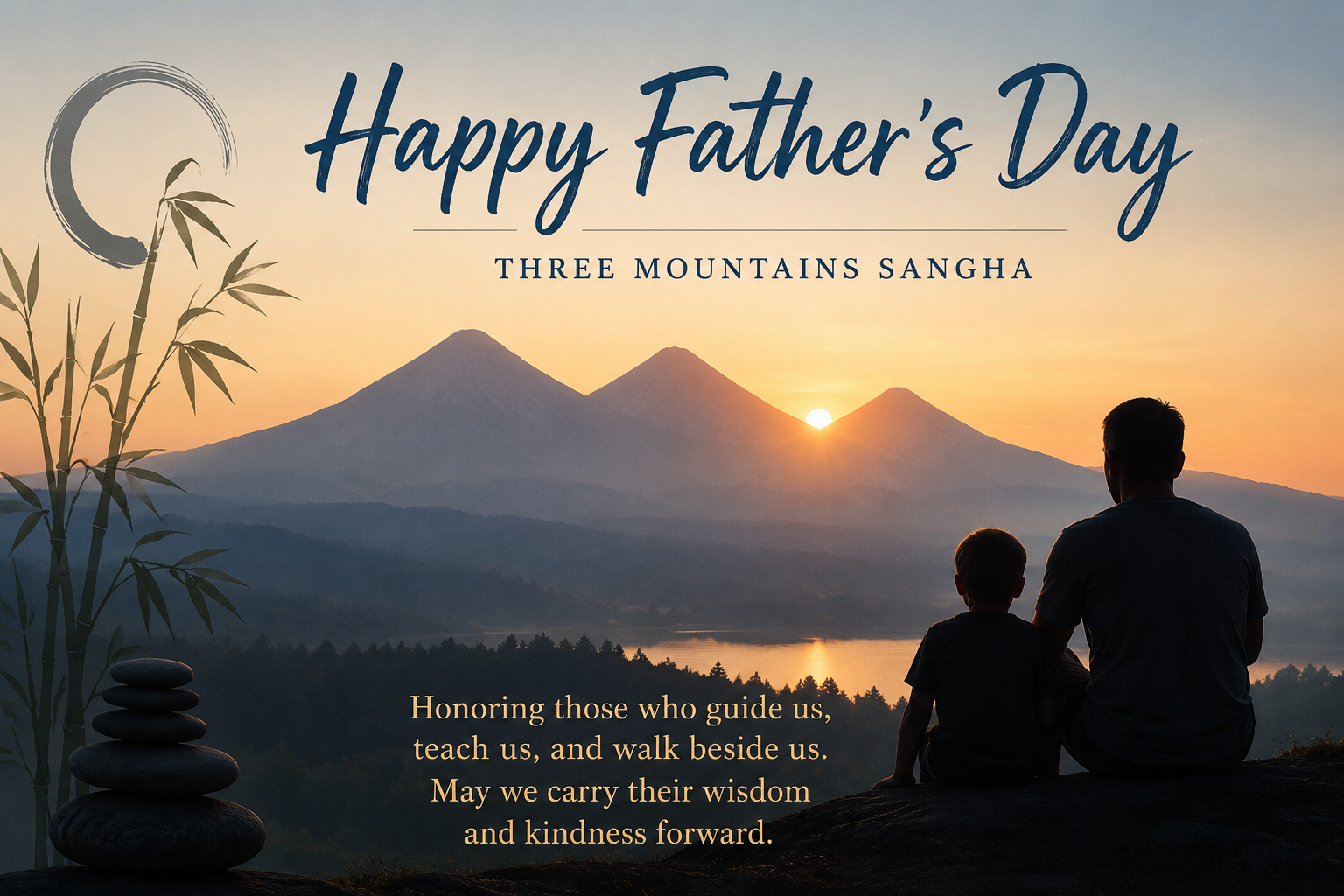
As Father's Day arrives, we pause to reflect on the people who helped shape our lives.
For some, this reflection centers on a father. For others, it may be a grandfather, stepfather, uncle, mentor, teacher, coach, elder, or community member who offered guidance, support, and care along the way.
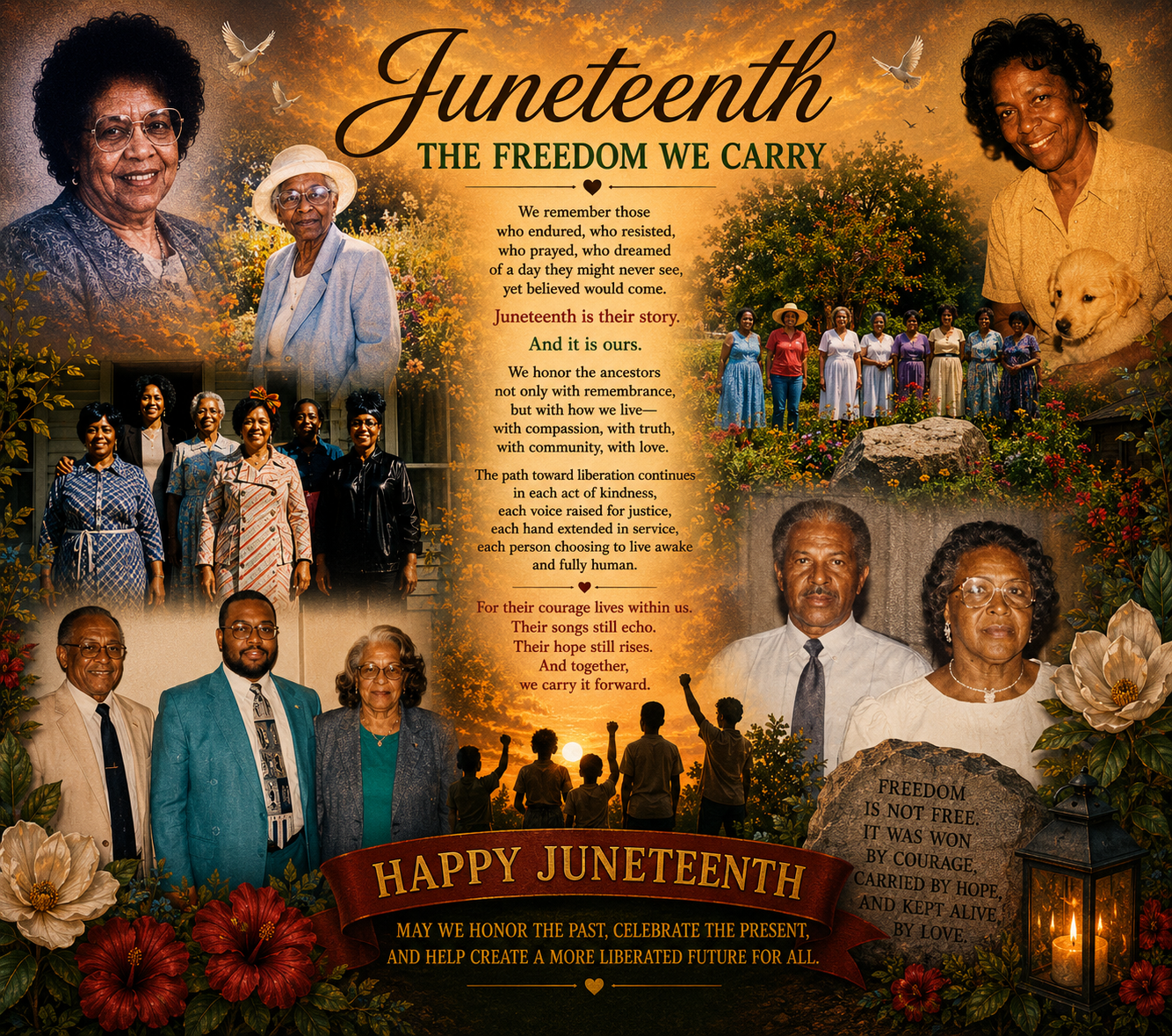
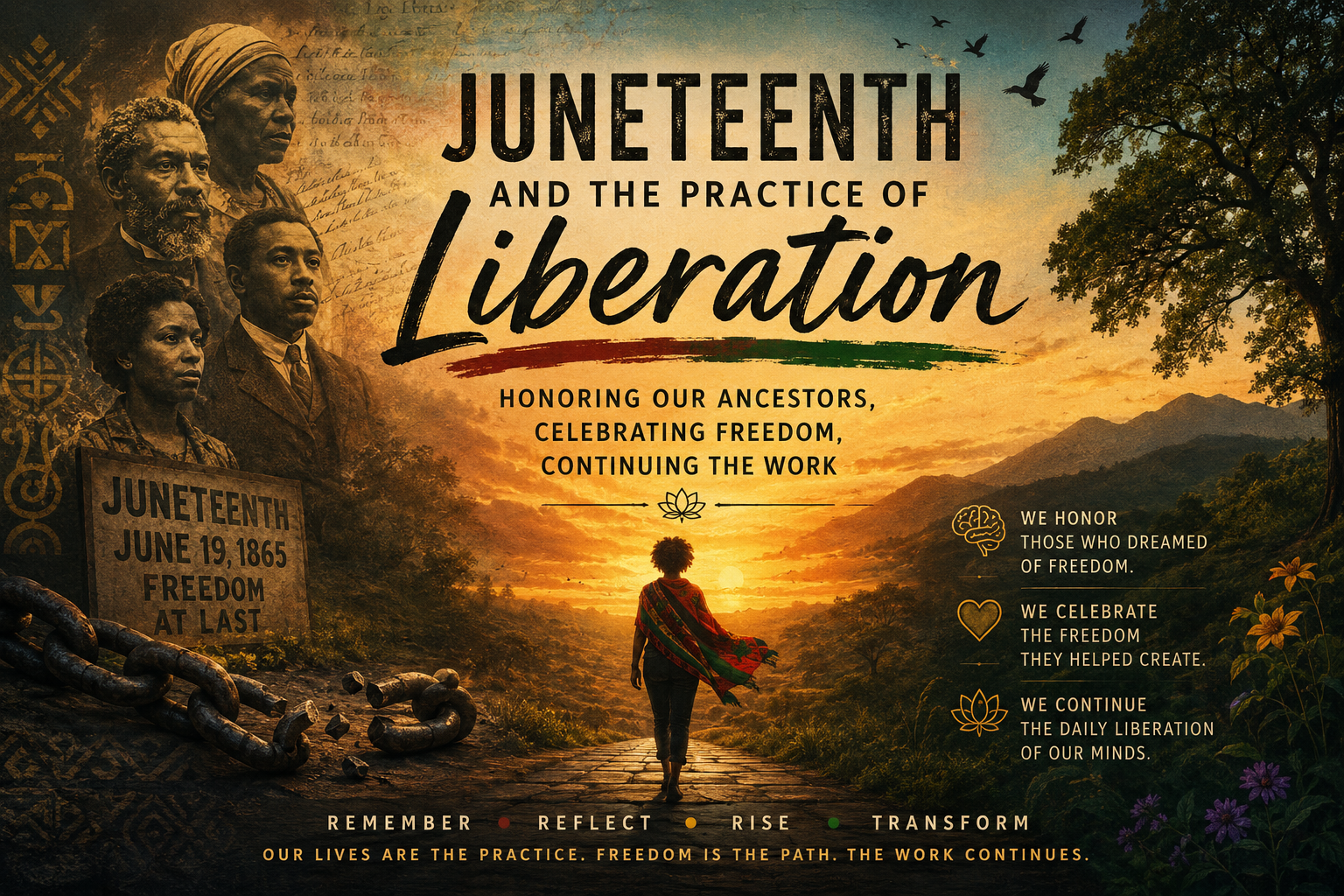
It marks June 19, 1865, when the last enslaved African Americans in Texas were informed of their freedom, more than two years after the Emancipation Proclamation had been issued. It is a day of remembrance, reflection, resilience, and celebration.
I am beginning to understand that we all have innate access to wisdom. Some of it comes through study. Some through direct experience. Some through pain, joy, failure, love, loss, and beginning again.